Free Newsletter
Human-led creative direction is making a comeback in brand storytelling | Hannah Francis
Guest Contributor //June 9, 2026
Human-led creative direction is making a comeback in brand storytelling | Hannah Francis
Guest Contributor //June 9, 2026


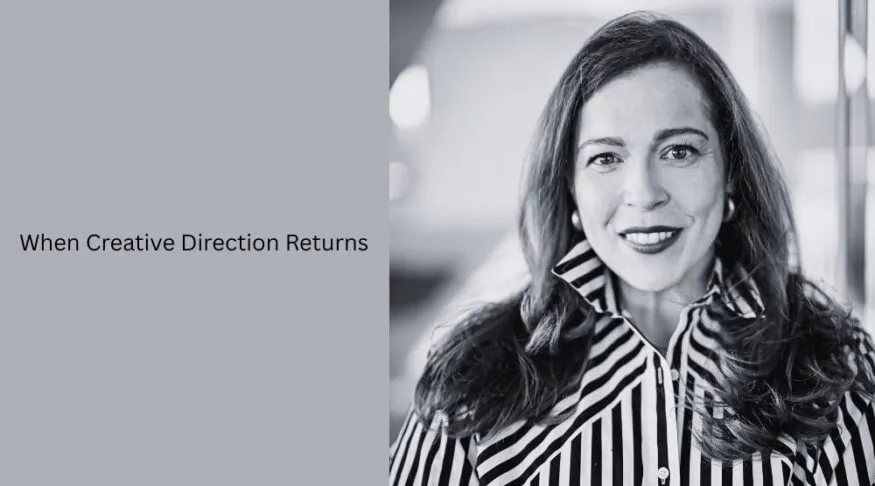
By Hannah Francis
As nearly every layer of brand building has become digital, there’s a noticeable return to human-led creative direction: photographers behind the camera, stylists with distinct visual language, and sets designed with intention rather than speed.
With 2027 and 2028 trend forecasts continuing to emphasize emotional connection and self-expression, brands are moving away from imagery that feels overly optimized and toward work that is more atmospheric, refined and culturally aware.
AI has introduced entirely new efficiencies in generating and scaling ideas. But as imagery becomes increasingly saturated, many brands are starting to ask a more important question: Does the work feel specific to the brand?
Several high-profile campaigns revealed a growing disconnect between technical execution and audience connection. The imagery itself often appeared polished and commercially resolved, yet audiences still felt detached. Not because technology was flawed, but because the work lacked tension and discernment.
The reaction hasn’t been a rejection of innovation but a recalibration of technology’s role in the creative process. While digital tools can support production and efficiency, they still cannot replace creative judgment or cultural perspective.
As craftsmanship and materiality have become central to modern brand storytelling, so has the renewed visibility of the people shaping the work. Luxury brands have increasingly begun crediting photographers, stylists, set designers and artists directly in campaigns and social captions, making creative authorship part of the story surrounding the image.
So how do brands approach this shift? It starts with clarity, not with increased budgets or expanded infrastructure. Some of the most recognizable campaigns today succeed because they communicate a strong visual point of view rather than trying to appeal to everyone at once.
This is especially evident in interiors and home furnishings, where a single object can feel entirely different depending on how it is framed, lit, styled or cropped. Creative direction transforms products into experiences.
There’s also been a noticeable shift toward irregularity and subtle disruption. After years of hyper-polished imagery and algorithm-driven perfection, audiences are gravitating toward visuals that feel less controlled and more intuitive. A slight blur, visible grain, motion across the frame, or imperfect surface lighting can suddenly make an image feel more intimate and believable.
Photographer Paolo Roversi became known for this approach, using long exposures and reduced focus to create imagery that felt dreamlike and cinematic rather than technically precise.
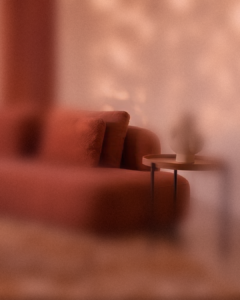
Across fashion campaigns more broadly, there has been a growing embrace of blur, obscured framing, and imagery that feels less formally resolved. Caracole Home helped bring this shift into the U.S. home interiors space, using softened focus and partial framing to evoke a fleeting memory rather than a traditional product shot. What once may have been considered an imperfection now reads as proof of presence, evidence that a real person directed the image.
Lighting has also evolved from purely functional to something far more sensory and immersive. Many of today’s most compelling campaigns use shadow, contrast and diffused illumination not only to reveal a product but also to shape the feeling around it. Light creates mood and depth, sometimes becoming the narrative itself.
This approach echoes the era of magazine-led storytelling in the 1990s and early 2000s, when photographers used dramatic lighting and editorial composition to create imagery that felt immersive rather than overtly commercial. The goal was never just visibility. It was to leave an impression that lingered beyond the moment instead of disappearing into a feed.
Composition has shifted in a similar way. The entire scene is no longer required to convey an idea. Partial views and tightly cropped imagery create a stronger sense of intrigue by inviting the viewer to look more closely. The curve of a chair or a sleeve slipping out of frame often says more than a fully revealed image.
That restraint creates intimacy and slows the viewer’s eye.
In contrast to content designed for immediate consumption, some brands are becoming quieter and more selective in their messaging. Rather than overexplaining the image, brands are letting pacing, sequencing and visual cues carry more of the narrative. The result feels more considered, drawing viewers in gradually rather than demanding attention all at once.
Creative direction ultimately signals a return to visual authorship. When people lead the process, their work carries instinct, personality, and nuance that automation alone cannot replicate. Over time, those decisions shape a recognizable visual language that audiences associate with a brand almost immediately.
And in a landscape saturated with endless content, that sense of identity grows increasingly valuable.
Hannah Francis is the founder of Hannah Francis & Co, a creative brand strategy studio.
Related Articles
Related Content